
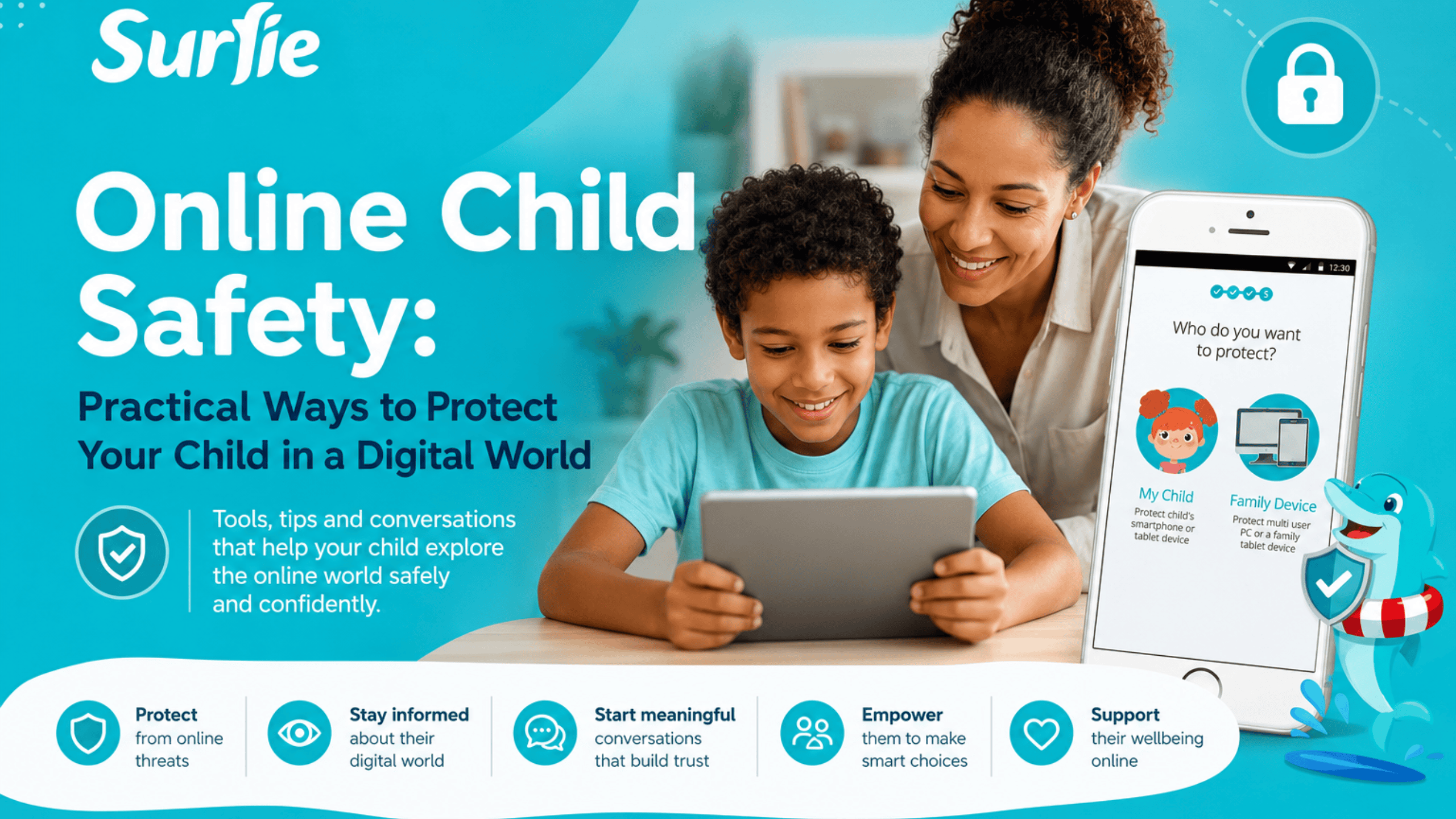
Online child safety starts with understanding the risks
The internet has become a natural part of childhood. From homework and educational apps to games, videos, and social media, children are spending more time online than ever before. While technology offers incredible opportunities to learn and connect, it also introduces new risks that every parent should understand.
When we were growing up, "stranger danger" meant avoiding unfamiliar people in the real world. Today, those same dangers have moved online. Instead of offering sweets, strangers may send friend requests, messages, links, or invitations through the digital platforms our children use every day.
As parents, our goal isn't to eliminate technology — it's to help our children use it safely, confidently, and responsibly.
Online child safety isn't about monitoring every click or banning devices altogether. It's about equipping children with the knowledge and confidence to make smart decisions, recognise potential risks, and know when to ask for help. By building healthy digital habits early, we prepare children to navigate today's online world with confidence.
5 practical ways to protect your child online
Here are five simple strategies every family can implement to build online child safety into everyday life, without turning parenting into surveillance.
Create clear family digital rules. Work together to establish a simple family technology agreement. This could include:
- Daily screen time limits
- Tech-free zones such as bedrooms or the dinner table
- What to do if something online feels uncomfortable
- Rules around downloading apps or chatting with strangers
When children help create the rules, they're far more likely to understand and respect them.
Use smart digital protection. Technology should support good parenting, not replace it. Parental controls, SafeSearch, age-appropriate filters, and privacy settings all help. Tools like Surfie provide an extra layer of protection by helping parents understand their child's digital world, while encouraging healthy conversations instead of constant surveillance.
Stay curious and involved. Rather than only checking what your child is doing online, take an interest in it. Ask what game they're playing today, who they usually chat with, or what they enjoy most about an app. Showing genuine interest builds trust, making children much more likely to speak to you if they encounter cyberbullying, inappropriate content, or suspicious behaviour.
Protect personal information. Teach children that not everything belongs online. Simple habits can make a big difference:
- Cover webcams when they're not being used
- Turn off microphones when they're unnecessary
- Avoid sharing personal information
- Use avatars instead of real profile photos where possible
- Create strong passwords together
Raising digitally resilient children
The goal isn't to keep children away from technology. The goal is to prepare them to use it wisely. Digital resilience means helping children learn to recognise online dangers, think critically before clicking, protect their personal information, speak up when something doesn't feel right, and make responsible decisions online. These are life skills they'll carry well into adulthood, long after any single app or platform has been forgotten.
Watch: Surfie — online child safety service youtu.be/iYEk-lQep5I ↗A simple next step for parents
You don't have to navigate online child safety alone. Solutions like Surfie are designed to support parents by making digital parenting easier. Instead of controlling every click, Surfie helps families stay informed, encourages meaningful conversations, and creates healthier online habits.
By combining practical guidance with the right tools, you can give your child the confidence to enjoy the digital world safely — today and into the future.